

What are the four pillars of weight loss
Your guide to starting your journey with us.


Hi there,
We've helped 4,000+ patients lose thousands of pounds locally in Oklahoma & Texas.
In the medical field, we've seen products come and go. They never seem to live up to their outlandish claims. GLP-1 medications, like Semaglutide & Tirzepatide, are different and are here to stay. They really work, and the best part is that they help people lose weight with minimal effort.
Imagine being relieved of the constant burden of your food noise. Not having to restrict yourself for long periods of time, until you finally break, and then start to inhale food, feel bad about yourself and tell yourself, "ok, I'm going to restrict myself even further." A vicious cycle.
We're going to show you the 4 pillars of weight loss to help you develop healthy habits for a healthy you to reach your goal.
Before you start
1. Write down your why
The most successful people in our program have a clear goal that drives them. To find yours, start with why you want to lose weight and keep asking "why" until you uncover the deeper reason.
For example: “I want more energy.” Why? “To play with my kids.” Why? “Because it makes them happy.” There’s your goal—making your kids happy.
Write it down and keep it visible as a reminder.
2. Get a scale
Weighing in regularly helps you stay mindful, consistent, and on track with weight loss. Research shows frequent weigh-ins improve long-term success. Choose a schedule that works for you, weigh at the same time each day (ideally in the morning on an empty stomach), and use the same scale to account for natural fluctuations. Consistency is key.
#1 Diet
How much you eat determines how much weight you lose, what you eat determines how easy it is.
Let's say you and your twin both eat 1,600 calorie a day. You only eat donuts, and your twin only eats broccoli. You will both lose the same amount of weight.
What!? You can eat whatever you want and still lose weight?
Yes. BUT you’re going to be miserable.
This is what 1,600 calories of Processed junk food vs 1,600 calories of healthy food looks like.

Healthy food will leave you more satisfied throughout the day with less cravings. Junk food will leave you hungry and craving more.
That’s because food companies' main goal is to have you come back. So they process their foods, fill them with addictive ingredients that encourage you to eat more such as white flour, sugar, additives & preservatives and the oh so tricky “enriched wheat flour.”
In fact, sugar can activate the brain’s pleasure centers as much as drugs and alcohol. So not only are you eating less food with the food group on the left, you’re always miserably hungry.
The goal is to eat the least amount of calories, the most amount of food and leave yourself without miserable cravings.
You can do this by focusing on protein + fiber + water.
Protein
-
Makes you feel full
-
Increases metabolism(takes more calories to digest than carbs / fats
-
Maintains muscle mass(which helps you burn more calories at rest)
-
Choose lean protein sources like chicken, fish, tofu, or legumes.
-
Eat 1.2g of protein per pound of weight for women, and 1.3g for men.
Learn more about protein


Fiber
Fiber does two things
-
Makes you feel full(expands in your stomach)
-
1 cup of brown rice makes you more full than 1 cup of white rice
-
-
Empty calories - not all fiber is broken down and absorbed.
-
Aim for 25-30grams of fiber a day from your diet.
-
Choose Vegetables, whole grains, nuts & seeds, fruits.

Water
-
Makes you feel more full
-
1 cup of grapes will make you feel more full than 1/4th cup of raisins even though they have the same amount of calories and are the exact same thing except that grapes have water.
-
-
Prevents cravings compared to alternatives
Start your day with water: This can wake you up and get your metabolism started.
Drink a glass before meals: This can make you feel fuller which will help with portion controls.
Learn more about water
Carbs
Carbs and Fats are important for a well balanced diet however they are usually the ones that get us in trouble in terms of cravings and gaining weight. It's all about choices.
Good carbs - complex
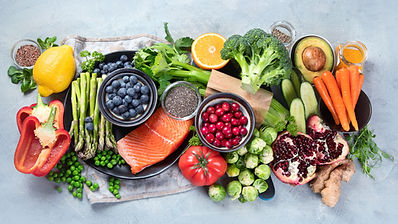
Complex carbs are hard to break down and digest which means it keeps you feeling fuller for longer. These foods are usually have a lot of nutrients.
Good fats - unsasturated

These foods improve your cholesterol levels, provide essential nutrients and are helpful with blood sugar control.
They are things that food companies put in our processed foods to make them more addicting. Such as added sugar, white flour, enriched wheat flower and white rice. If you see these in the ingredients list, make sure to eat it in moderation. Learn more about carbs
Fun carbs - simple

Simple carbs are...simple, and easy to break down and digest. It causes insulin spikes and goes through your system quickly and is why you're always hungry when you eat them. These are the foods are the main reason for cravings.
Bad fats - saturated

These foods contribute to clogged arteries, cardiovascular risk and are not nutritious.
#2 Activity
There are four ways you can use calories.
.png)
#1 Activities that you don’t control such as thinking, breathing, and blinking.
.png)
#2 Activities that you control and do daily such as walking, brushing your teeth, and typing.
.png)
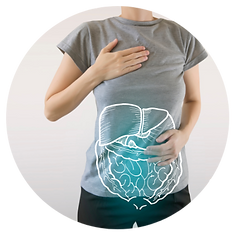
#3 Activities involving the digestion of food such as creating enzymes to break it down and absorb it
.png)
#4 Activities you do outside of normal movements such as lifting weights, jogging, and crossfit.
Caloric expenditure
How does your body spend most of its calories? Most of it from doing autonomic activities. Cool right? After that, it’s daily movements, digesting food and lastly, and most surprisingly…. Exercise. What?!
Yes. Exercise is the least effective way to directly spend calories. Make no mistake that exercise is important for weight loss indirectly, and for overall health. But for directly spending calories, it’s in last place.
So for weight loss, we still want to exercise, but we want to put more focus on movement and what we eat.
The easiest way to do this is to get 10,000 steps a day. That’s about 70 marathons a year.
For exercise, weight lifting is more effective for weight loss than cardio. It builds muscle which increases your metabolism and doesn’t increase your hunger like cardio does.
Here are some great workouts
.png)
#3 Sleep
If you don’t get the proper sleep, your progress will suffer. Whenever you are deprived of sleep, it affects your hunger and satiety hormones. This mean you
Feel hungrier: people who get less than 7 hours of sleep get hungrier during the day, and takes more food to feel more food.
Eat more: If you lose a few hours of sleep, you’re prone to eat an extra 559 calories on average that day.
Burn less calories: people who slept 8.5 hours a night, burned 400 more calories than people who slept 5.5 hours a night.
Make poor food choices: Missing out on sleep makes you more prone to engorging on processed, fun foods like cookies, chips, and pastries. Scans show that sleep deprived people had less active brain control than when they were rested.
Sleep can also affect your stress levels which leads to poor judgments and it’s easier to succumb to fun foods. It also can cause us to skip work outs because we’re too tired, or make our works outs less intense.

How to get good sleep
Avoid screens: Blue light affects our production of our sleep hormone melatonin.
Wear blue light glasses. Stop screen time 4 hours before bed. Put your screens in night mode. Pick up a hobby like reading before bed. Keep screens outside of the bedroom.
Black out your room: wear a sleep mask, and black curtains. Be aware to cover lights from your charger, tv and other electronics.
Keep a cool temperature at 60-70F: you'll sleep more efficiently and spend less time tossing and turning with cooler temperatures.
Eat earlier and lighter before bed: Eating causes blood glucose fluctuations, reduces melatonin production and dusrupts your body's natural temprature.
And if you wake up in the middle of the night, whatever you do, do NOT look at a clock. It will trigger anxiety and a’ll you’ll be htinking about is “i’ve got ot be awake at 6:00am.”
#4 Stress
Stress releases the hormone, cortisol, which increases appetite, promotes fat storage around the abdomen, and can lead to cravings for high-calorie, sugary foods, cause you to eat larger portions than normal, Cause sleep disturbances.
De-stress
Exercise: your muscles are like a pharmacy to your brain, when you exercise it releases endorphins, and increase dopamine and serotonin which all help to improve your mood & reduce stress. You can never think your way out of stress, but you can move your way out of it.
Deep breaths: lower’s heart rate, blood pressure and stress hormones.
Connect with loved ones: social support is important for stress.
Meditation, going for a walk, support from loved ones, don’t recall the past are some great ways to reduce stress and clear your mind.
Overview
If you really think about what we told you, it was to eat healthy, move more, sleep well and don't stress.
Did we say anything new to you that you already didn’t know? Most likely not.
The truth is, you already know what you need to do. So the real question is. Why aren’t you doing it?
We said that weight loss is 90% diet and 10% movement. But none of that matters if you don’t have the right mindset.
Habits, Not goals
James Clear
“New goals don’t deliver new results. New lifestyles do. And a lifestyle is not an outcome, it is a process. For this reason, all of your energy should go into building better rituals, not chasing better results.
It takes on average 66 days to form a habit.
start small or you will overwhelm yourself and quit
Repitition: the more you do an action, the more automatic it becomes
link habits to existing routines
You have to make it your identity. For changes to last you have to make it your identity. Once you decide that that’s the person who you are, that behavior will be consistent. You have to be very careful about the labels you create for yourself. There’s a massive difference between “I’ve got 40 extra pounds on me” and “I’m a fat person.” Your identity defines your experience, what you notice about yourself, what you’re willing to and not willing to try.
It’s better to see yourself as a healthy person who has 40 lbs to lose. That way when you’re faced with hundreds of decisions a day you start asking yourself, what would a healthy person do?
This is way easier than doing super tactical things like weighing their food, tracking calories etc. this will cause burn out and quit.
You don’t have to be perfect, you just have to be better than you are right now.
The longer you do it, the more it becomes habit and you don’t even think about it.
